
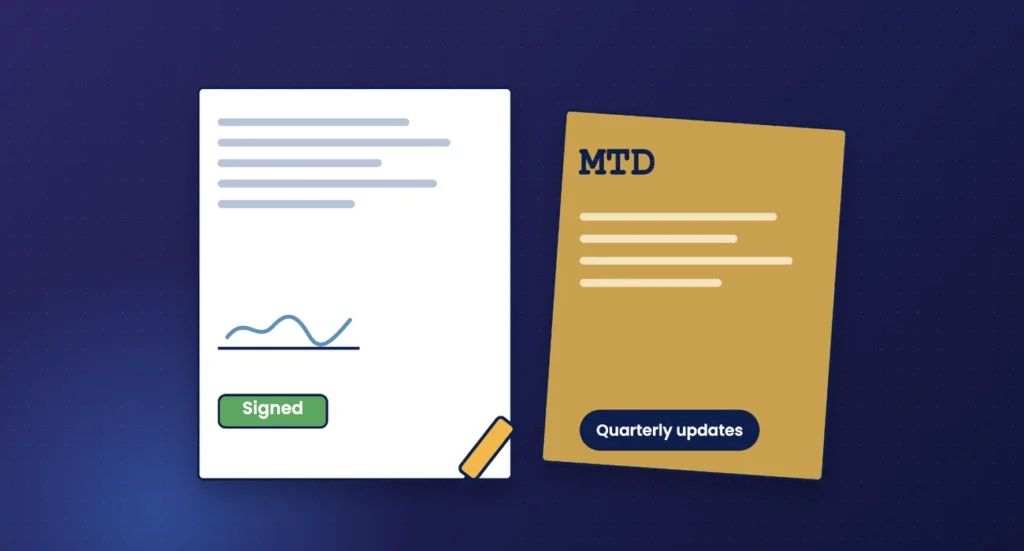
If a client is joining Making Tax Digital for Income Tax on 6 April 2026, their letter of engagement needs updating before the first quarter starts. The new letter should say who signs the client up, who keeps the digital records, who prepares and submits each quarterly update and the year-end tax return, what the client must provide and by when, and how your fees reflect the extra work.
A standard self-employed or landlord schedule was written for one annual return. MTD for Income Tax adds four quarterly deadlines a year, new record-keeping rules and a new way of authorising agents, so the old wording leaves gaps on both sides.
Start with the professional body template
You do not need to draft from scratch. In June 2025 the Joint Professional Bodies Engagement Letters Working Party (AAT, ACCA, ATT, CIOT and STEP) published a specific MTD for Income Tax schedule of services. It is designed to replace the existing Personal Tax: Sole Traders and Property Income schedule for clients who must comply with MTD for Income Tax, and it was updated in November 2025. ICAEW’s Tax Faculty also consulted members on a draft MTD income tax schedule in 2025, to sit alongside its existing engagement letter.
The template is a starting point. It uses bracketed options so you can pick the wording that matches how you will actually work with each client, and it should be read alongside the ethical guidance in Professional Conduct in Relation to Taxation (PCRT).
What to cover in your MTD for Income Tax schedule
Sign up
Make it clear whether you will sign the client up, or whether they will do it themselves. The joint bodies’ schedule places responsibility for signing up with the client unless they instruct you to help in good time, and it reminds clients that signing up means agreeing to HMRC’s terms, including deadlines and penalties.
Digital records
This is the area most likely to cause disputes, so spell it out. The schedule offers two routes:
- You keep the records: list exactly what the client must send you, such as sales and purchase invoices, bank statements, and details of cash receipts and payments.
- The client or a third party keeps the records: the client is responsible for keeping them in a format that meets HMRC’s digital record-keeping requirements, and you may need to check the process. If their records do not work with your software, the letter can say you will agree a solution, which may carry an extra fee.
Quarterly updates
State whether you will prepare and submit the quarterly updates, and on what basis: after the client approves the figures, or on the data they provide. Include how many days after each quarter end you need the records. For 2026/27 the quarterly deadlines are 7 August 2026, 7 November 2026, 7 February 2027 and 7 May 2027.
The year-end tax return
Explain that you will prepare the tax return from the quarterly updates and any other information the client provides, and submit it once they approve it. Set your own date for receiving year-end information, ahead of the 31 January filing deadline.
Client responsibilities
The template keeps the core principle that clients remain legally responsible for their returns. Useful points to include are that the client is responsible for:
- making sure their record-keeping system meets the digital requirements
- making sure returns are correct and complete before approving them
- quarterly updates and tax returns reaching HMRC by the due date
- paying tax on time
- telling you about changes in circumstances, and forwarding HMRC correspondence
Penalties and appeals
MTD for Income Tax uses a points-based system for late submissions. HMRC has said it will not apply penalty points for late quarterly updates in 2026/27, but late tax returns and late payment can still be penalised. The template includes optional wording on how much notice you need if a client wants you to appeal a penalty.
Exemptions
The joint bodies’ schedule states that the practice is not responsible for considering or applying for exemptions, but invites the client to raise it if they think they qualify. Decide whether that fits your service, or whether exemption reviews are something you offer for a fee.
Authorisation
Your letter should match the authorisation you hold with HMRC. MTD for Income Tax uses the agent services account, and HMRC recognises main and supporting agents. A main agent can do everything, including the tax return. A supporting agent can keep records and send quarterly updates but cannot file the return. If a bookkeeper handles the quarters and you do the year end, both letters should say so and should not overlap.
Fees and timelines
More deadlines mean more touchpoints, so review your fees for each in-scope client. Things to consider:
| Fee item | Question to settle |
|---|---|
| Sign up | One-off fee, or included in the first year? |
| Bookkeeping and records | Who keeps them, and how often are they reviewed? |
| Quarterly updates | Fixed fee per quarter, or built into a monthly fee? |
| Tax return | Does the fee change now quarterly data is already submitted? |
| Late or incomplete records | Is there an extra charge if records arrive late? |
| Ad hoc queries | Are calls and emails included, or charged separately? |
A monthly fee is one option, as it matches your income to the year-round workload. Whatever you choose, put it in writing before 6 April so the client agrees to it before the first quarter begins.
A quick checklist for updating letters
- Identify every client in scope from 6 April 2026
- Download the latest MTD for Income Tax schedule from your professional body
- Choose the record-keeping and submission wording that fits each client
- Add your internal deadlines for records after each quarter end
- Confirm main or supporting agent status
- Reprice the work and agree the fee
- Send the updated letter for signature before the first quarter starts
Frequently asked questions
Do I need a new letter, or just a new schedule?
The joint bodies’ template is a schedule of services designed to sit with your existing engagement letter and terms of business. Check your own professional body’s guidance on how it fits.
Can I use the same schedule for every MTD client?
The structure can be the same, but pick the options for each client. Who keeps the records and who submits the updates often varies from client to client.
Should clients sign before 6 April 2026?
Ideally, yes. Getting the letter signed before the first quarter starts means both sides know who is doing what from day one.
Does the letter replace HMRC authorisation?
No. A letter of engagement is your contract with the client. You still need to be authorised through your agent services account.
How Engager helps
Engager lets you build letters of engagement from your own templates, send them with proposals, and have clients sign online with built-in e-signatures. The pricing tool helps you price quarterly work consistently across clients.
Once a letter is signed, you can request HMRC agent authorisation from the client record using the 64-8 integration, so the engagement and the authorisation stay in step.
Not using Engager yet? Start a free 28-day trial, with no card details required, or book a demo.